By Eric & Stephanie Fox
Our daughter, Veronica, has a severe peanut allergy. She always carries an epi-pen and has to be very careful about the foods she eats. We always assumed this would be the most significant medical issue she would need to deal with throughout her life. Then we learned she had scoliosis.
During a routine medical exam at age 11, Veronica was diagnosed with idiopathic adolescent scoliosis. Her curve was very mild at the time and we were told it wasn’t anything to worry about for now and did not require treatment. We were advised to essentially just monitor it. Veronica was actually sort of excited about the diagnosis at first, as it was something unique to tell her friends about.
Over the next few years, her scoliosis was rarely mentioned during doctor visits—we weren’t even sure the doctors were checking it regularly. Since Veronica had no pain or symptoms, we
assumed it remained mild and, honestly, gave it little thought. During this time, Veronica also became very active with dance and theater. We were amazed at the strength, flexibility, and
endurance that she gained from her dance training. She seemed healthy and fit. Near the end of middle school, Veronica experienced a growth spurt, which we later learned is when scoliosis often progresses to a more severe form. And, sure enough, around her 14th birthday, her doctor took a closer look at her spine and noticed that the curve seemed much more prominent. X-rays were ordered and we were given a referral to a doctor who specialized in pediatric orthopedics.
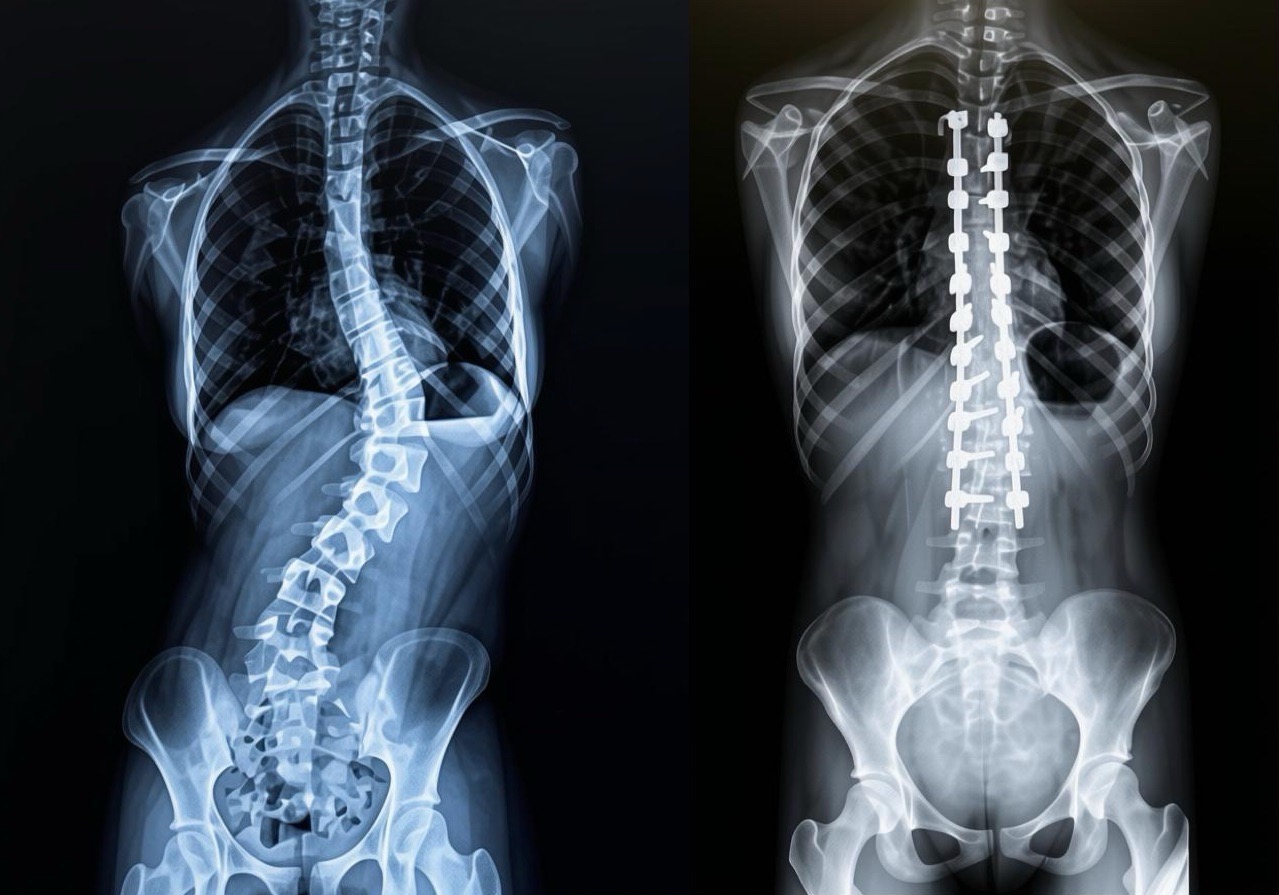
We received the x-ray image via our electronic medical records a week or so before we met with the specialist. Even to our untrained eyes, the curve in her spine was evident. Since we did not know what it all meant or how severe it was, we asked an AI chatbot about the x-ray. It confirmed our worst suspicions: Veronica’s scoliosis was now severe and spinal fusion surgery
would likely be recommended.
Stunned, we began researching severe scoliosis and spinal fusion. The more we learned, the more we realized that surgery would likely be the best option for Veronica’s long-term health. We began discussing the possibility of surgery with her, including the long recovery and impact on future health and mobility. When we finally met with the orthopedic surgeon, we were not surprised when he confirmed that her curve had progressed to the point where bracing would be of little help and that surgery was recommended. Since we were prepared for that recommendation and had already agreed it was the right choice for Veronica, our attention immediately turned to scheduling the surgery.
Since Veronica did not want to miss school recovering from surgery, we scheduled her surgery for the following summer (about 8 months after our initial appointment with the surgeon). That 8-month window was filled with more research, following scoliosis and spinal fusion stories on social media and the web, connecting with friends and family members who had scoliosis, lots of dancing and gymnastics and workouts, a family vacation, and planning for recovery. Veronica, now in her first year of high school, also started to experience regular back pain during this time, especially during marching band and gymnastics. While we did not like that she was starting to experience so much pain, it did provide some reassurance that we made the right decision to move forward with the surgery, as we were told her curve would otherwise slowly get worse as she aged.
By the time the date of her surgery arrived, we felt pretty well prepared. Emotionally, we all found it really helpful to do research on spinal fusion and to read the stories and experiences of those who had gone through it before so we knew what to expect. However, we also learned that in online forums like Reddit, there is likely a strong selection bias: people who have a difficult surgery or recovery seem to be much more likely to post and seek support there. We quickly learned it was important to seek out the positive stories and comments, too. We also had a friend whose daughter had the surgery about 9 years earlier, and she generously agreed to chat with Veronica and answer any questions she had. Physically, Veronica worked hard to make sure her body was as strong and healthy as possible heading into surgery. We went into pandemic-style lockdown mode the week or two before surgery, as well, to help ensure none of us became sick. Finally, we purchased a variety of items recommended by others to make recovery easier: special pillows, bed rails, a shower chair, seat cushions, ice packs, etc. Knowing that recovery would be long and hard, Veronica was actually eager to get the surgery over with so that she could “get on” with her life.
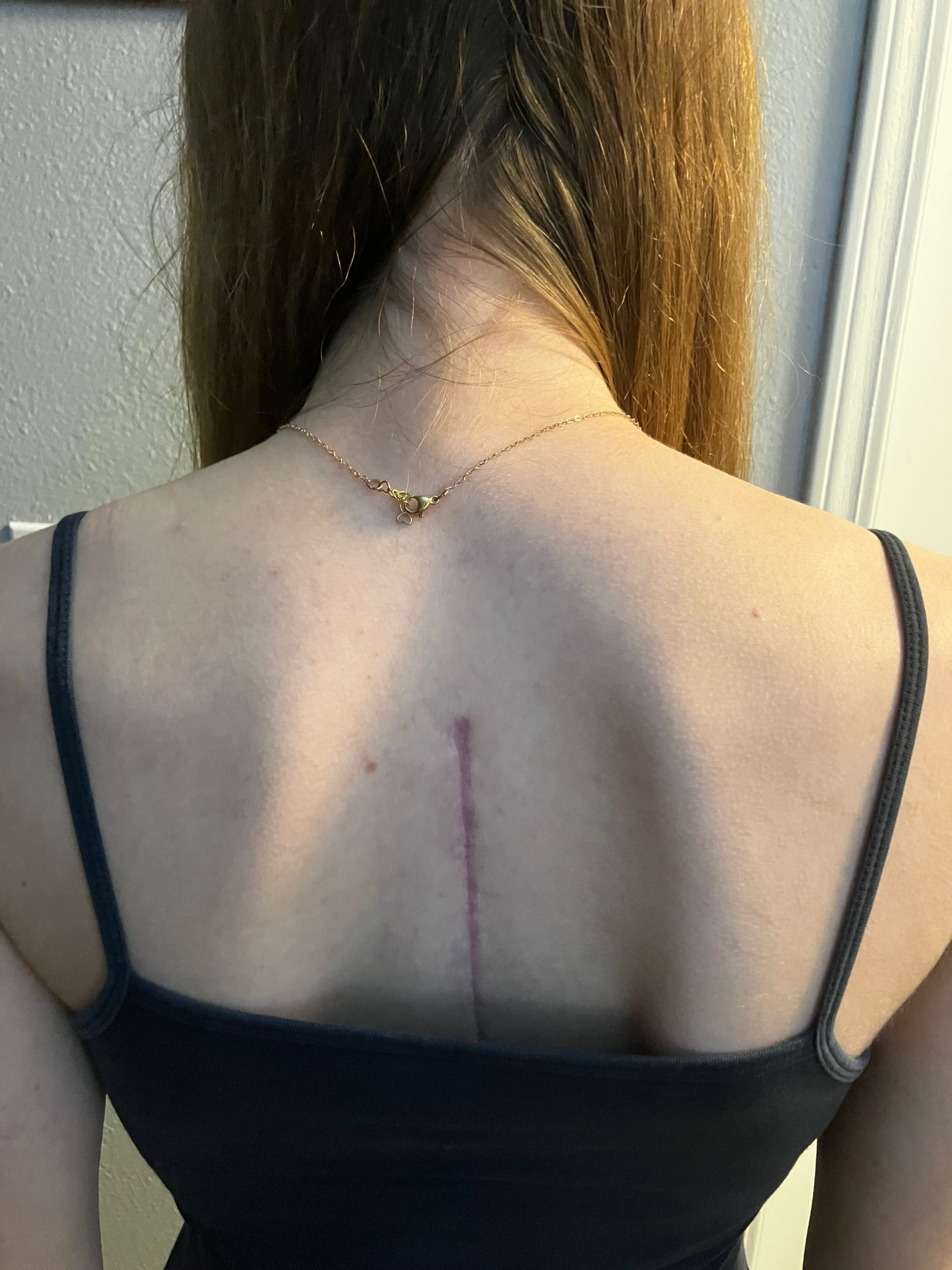
On July 3, 2026, Veronica had spinal fusion surgery (T5-L3), including two titanium rods and 20 screws. The day started with a pre-dawn drive to the hospital about 45 minutes from our house. By 7:30am, they were rolling her into the operating room. We fought back nervous tears as we headed to the hospital cafeteria to eat breakfast while we waited. The medical team provided us with updates throughout the surgery. We received a call from a nurse when the surgery was started and another when it was completed. During the surgery, we received a text message about once an hour letting us know that, thankfully, “the patient is doing well.” A little after noon, her surgery was complete. The surgeon informed us that it went well (and he was able to fuse two fewer vertebrae than initially planned) and we soon joined Veronica in the recovery room.
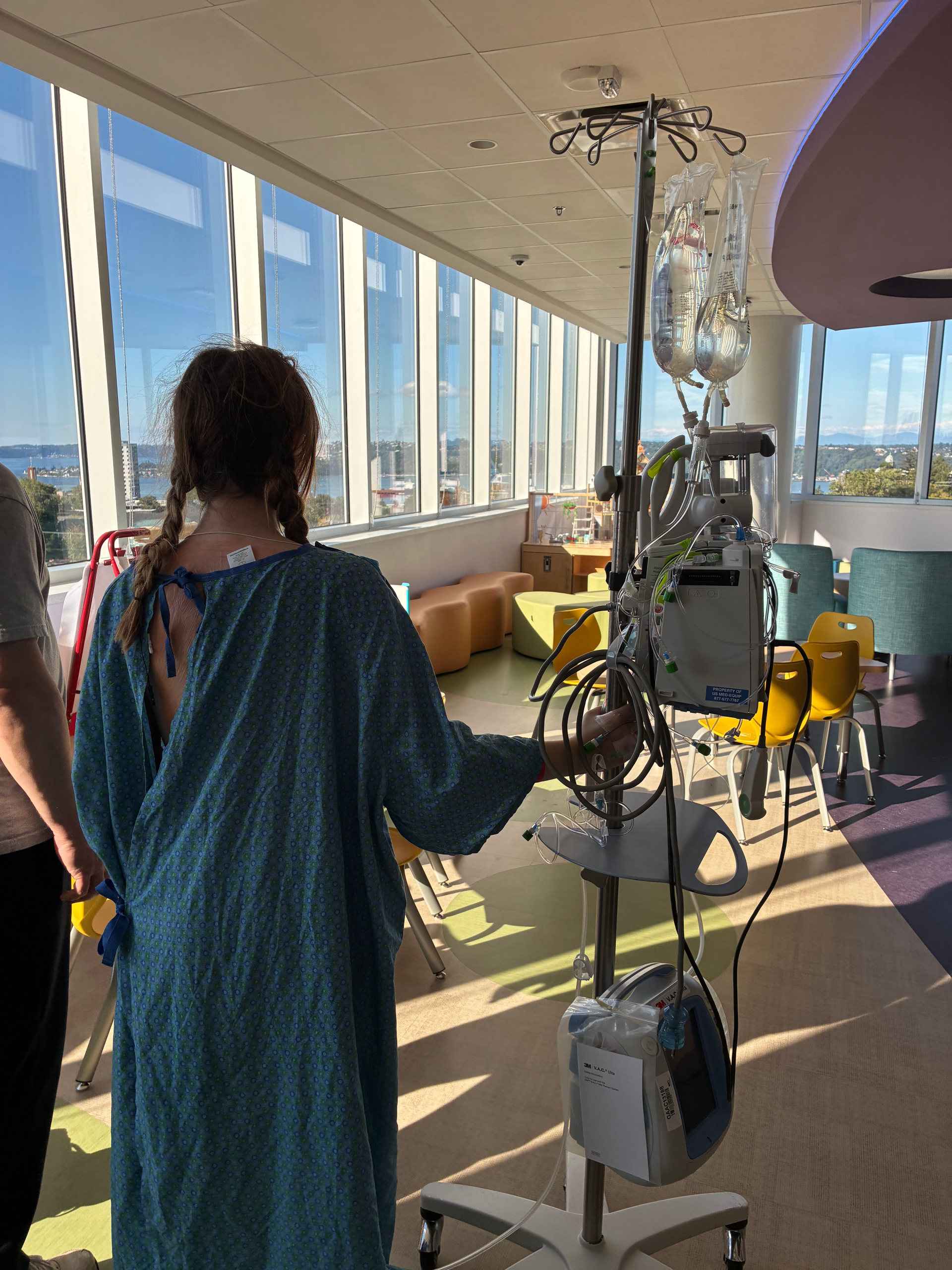
After her surgery, Veronica slept off and on most of the rest of the day. She vomited once (likely from the anesthesia or morphine) and was fairly drowsy from pain medication. The day after her surgery, she sat up in bed for the first time, stood up for the first time, sat in her chair for the first time, and even took a walk around the hospital floor. We were fairly shocked, elated, and beyond proud of her for taking those first, painful steps toward recovery. That evening, we walked to the hospital’s play room, which had a nice, panoramic view of multiple fireworks shows in the area. Veronica sat in a wheelchair while we enjoyed the show with other patients and their families.
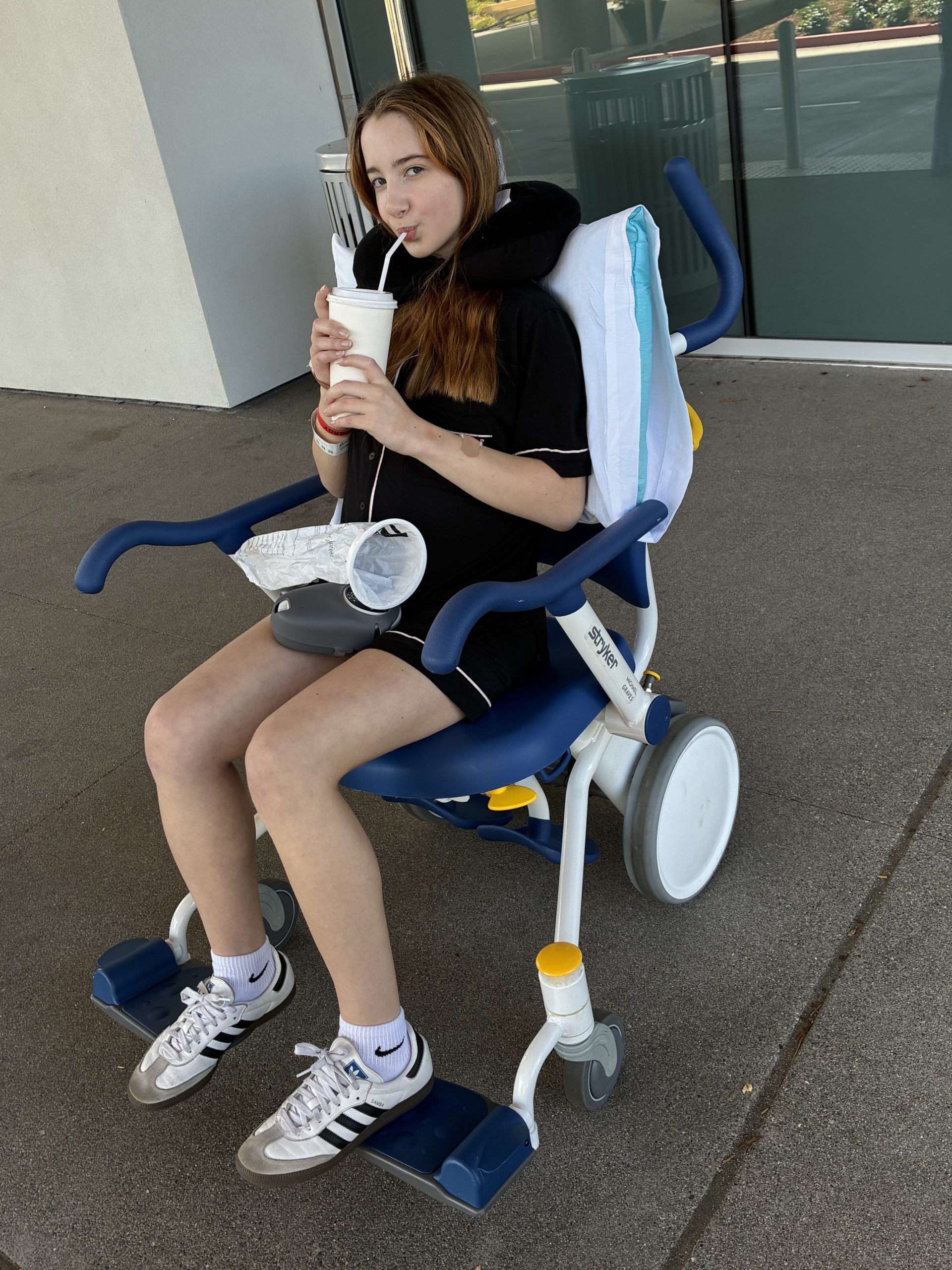
Three days after her surgery (and after a bit more walking and meeting with physical therapists), Veronica was discharged from the hospital and we made the long, uncomfortable drive home. We knew that riding in a car after the surgery could be painful, so we had extra cushions waiting for her. They probably helped a little, but we still had to watch Veronica spend most of the ride with her eyes tightly shut in pain and holding on tightly to try to steady herself.
Once home, we were shocked to see that Veronica could climb the stairs to her second-floor bedroom without much trouble. That was a major concern of ours before the surgery. Fortunately, both of us work from home, we were able to take some time off, and at least one of us was able to be with Veronica throughout most of the day during her initial recovery.
Although much of the first week back home is a blur, there were two scary moments that stood out. First, on the second day home, the wound vacuum that was attached to her incision fell on the floor and became detached. We were unable to re-attach it with a good seal, so we had to schedule an appointment with the surgeon’s office. Since her incision was healing nicely already, they just removed the vacuum and applied a standard bandage. Second, Veronica fell over in the bathroom. She was squatting to get something from under the sink when she tried to reach for and catch something that started to fall out. She lost her balance and fell over onto her back. It was scary and a bit painful for her, but fortunately she landed on a padded bath mat and felt better soon after.
We tried to “stay ahead of the pain” by giving her pain medication on a regular basis, including waking her up in the middle of the night for her next dose. We took one or more family walks every day and played a lot of video games. Slowly, her pain became more and more manageable, and 9 days after her surgery she no longer needed oxycodone and 18 days after surgery she no longer needed regular doses of ibuprofen or acetaminophen, either.
As we write this, it is a little over 3 months since Veronica’s surgery and she is doing great. She still has her “BLT” (bending, lifting, and twisting) restrictions in place, but is walking and attending school without a problem. She is mostly pain-free, except when she over-exerts herself. Even then, though, the pain appears mostly related to muscle soreness and fatigue as she begins to use her muscles again and her body adjusts to having a straight spine. This week we had her first physical therapy appointment since leaving the hospital, and Veronica is excited to have received a set of simple exercises she can begin doing daily to rebuild her strength, balance, and flexibility. Overall, we feel very fortunate that her recovery has gone so smoothly. She might not ever do the back bends she used to do in gymnastics and ballet again, but we’re confident she is going to be able to return to many of the other activities she loves to do. We couldn’t be prouder of Veronica. She faced her spinal fusion with remarkable strength before, during, and after the surgery, and she’s turned that experience into real advocacy for everyone living with scoliosis.
To learn more about Veronica’s journey from her own perspective, visit her personal story page by clicking the button below.
Read more patient stories like this from around the world.