When I was nine, my sister was diagnosed with Adolescent Idiopathic Scoliosis. She wore a Wilmington brace for a year and a half, during which I witnessed her discomfort while wearing her new shell. Despite feeling empathy for her struggles, I remained hopeful that I would not need to go through the same challenges.
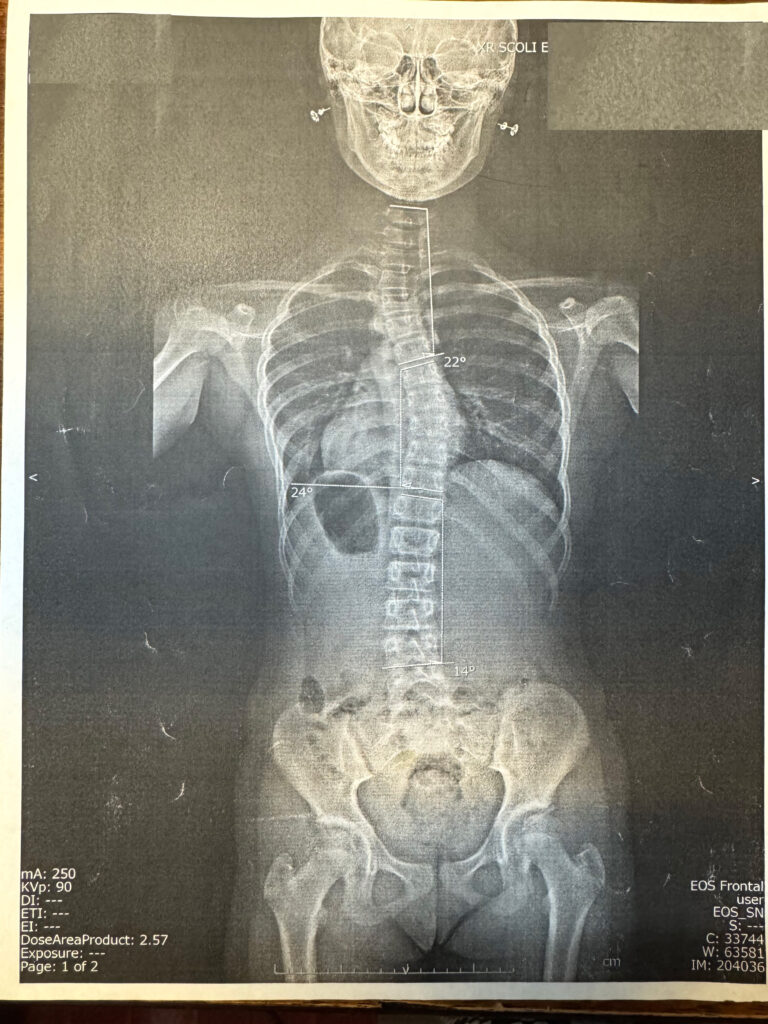
Nevertheless, at the beginning of seventh grade, I visited Nemours Children’s Hospital to check whether I had scoliosis, as it was common for siblings to have the condition. I remained optimistic that I would not have scoliosis or that my curvature would be mild enough that I would not need to undergo bracing. However, my hopes were dashed when the doctor revealed the results of my X-ray to my parents and divulged that I would be required to be braced to prevent further curve progression. My condition was not as severe due to early detection, and my curve degree was only in the twenties. Still, I felt apprehensive about the steps to come.
Not long after this first appointment, I was scheduled to be fitted for a Wilmington brace myself. It was certainly an experience that I will always remember, from the brief fear I felt when the doctors sawed the middle of the plaster for my brace to getting a rubber pad to put under my shoe sole after finding out that my hips were not of the same height. The most memorable advice my doctor told me after I received the brace was to remember that compliance with brace wearing was the most important factor for preventing curve progression. I would see that clearly in the next year and a half.
As I exited the hospital, I thought to myself about how I would be the most compliant brace wearer. After all, how long I braced for played a major role in my health, possibly for the rest of my life. However, I soon found how difficult it was to motivate myself to wear the brace. I didn’t mind sleeping in it, but it was during the time between school and sleep that posed the greatest challenge for me. I would either forget about the brace, surprisingly, or remember and not want to experience the discomfort just yet. Ultimately, I managed to maintain the required number of hours each night, but remaining disciplined in wearing my brace was a difficult task for me.
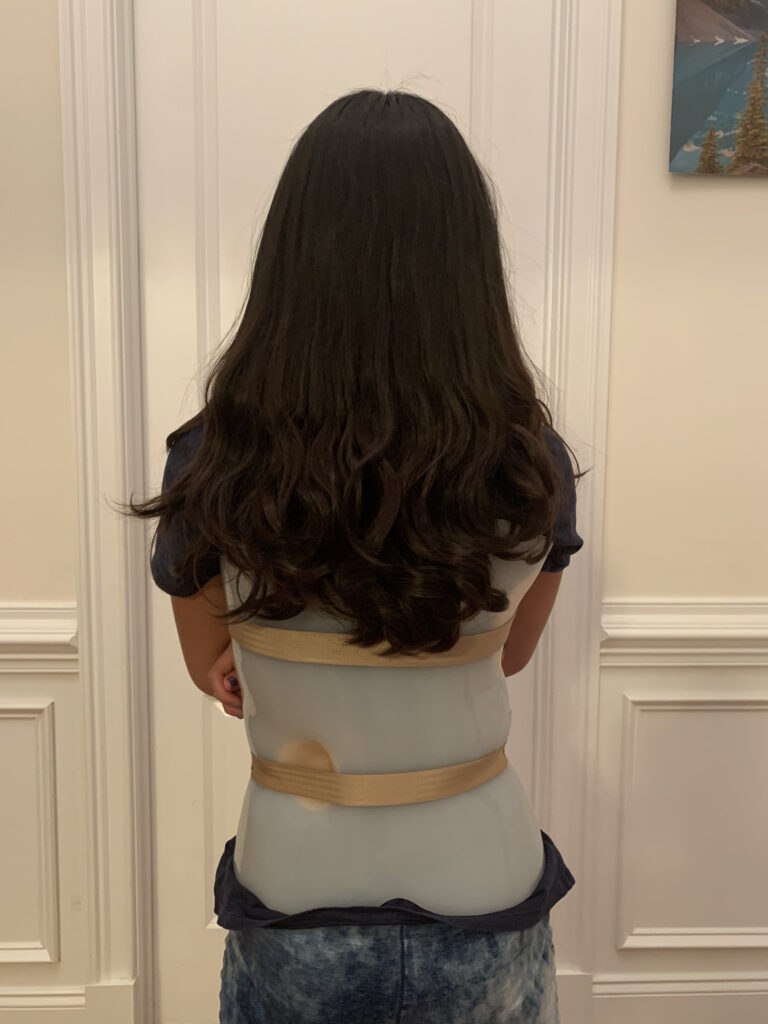
During the year and a half I was in the brace, I was away from my home several times, both on school trips and family vacations. Family vacations posed little more challenge besides fitting my brace into my suitcase, but taking the brace on school trips made me feel greatly self-conscious, especially at night. On both my seventh and eighth grade trips, the former to Echo Hill, an outdoor camp, and the latter to Washington D.C., I packed my brace into my suitcase just as I would for a family trip. My friends were very supportive when I took off my brace, but my discomfort with showing it to everyone led me to only wear my brace when I was underneath my blanket at night.
Finally, in the middle of eighth grade, I was told that I could stop bracing because I had stopped growing rapidly. I was ecstatic, and my curve even ended up a few degrees lower than what it had been when I first began bracing.
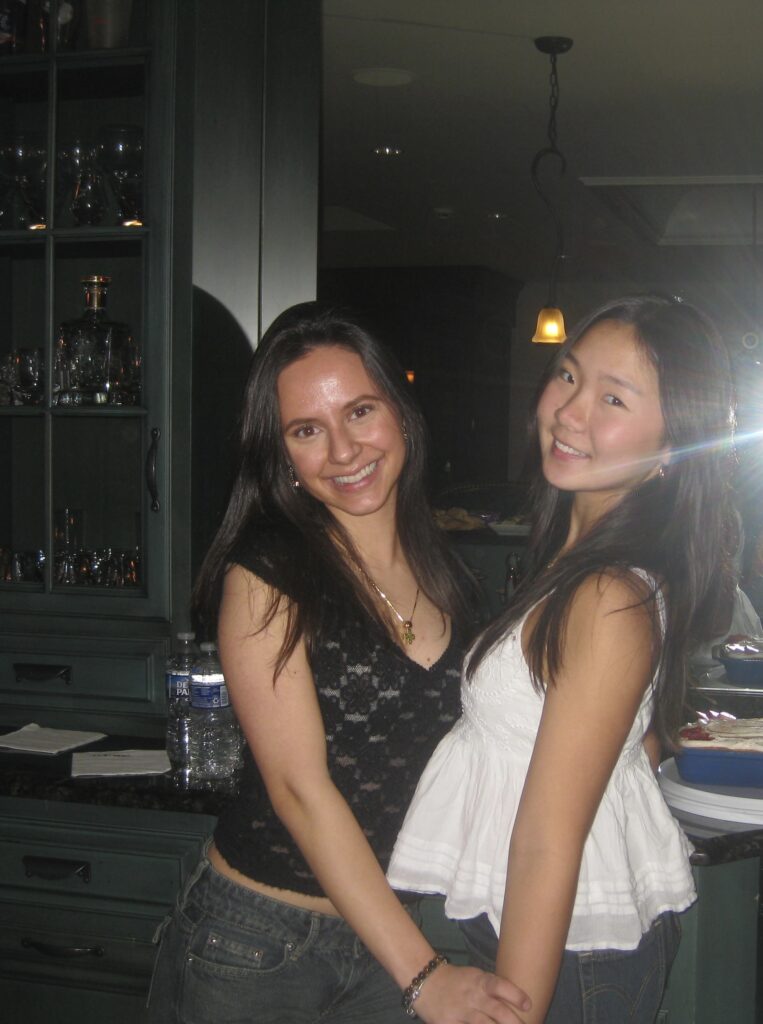
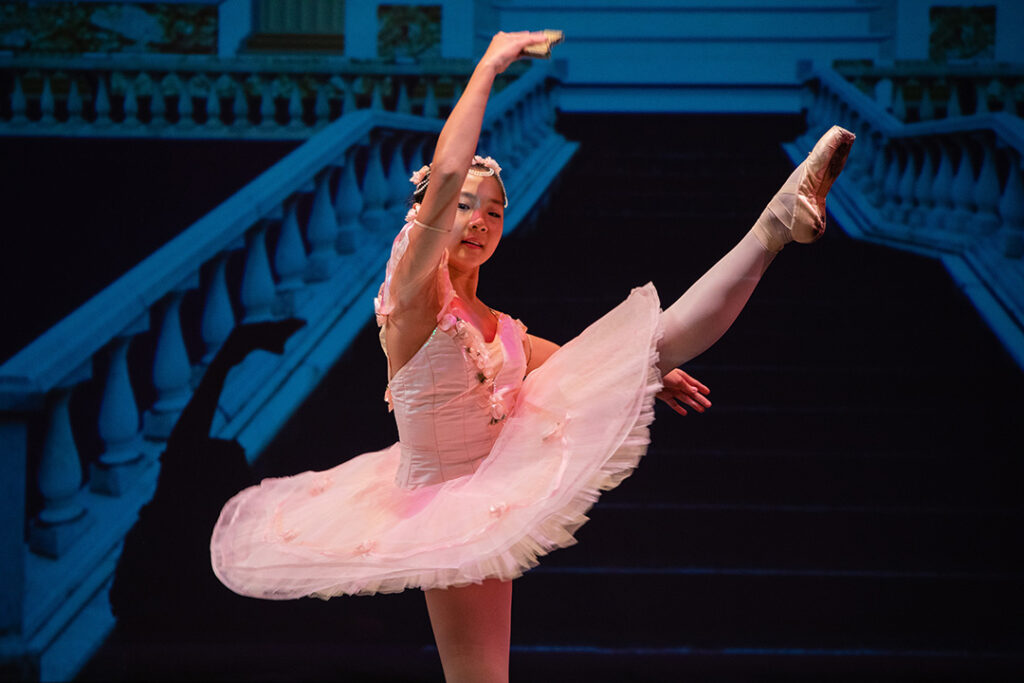
However, I began to experience some discomfort in my back as my curve progressed again slightly in the following year. I began practicing yoga, which was a fun experience, especially because I have danced ballet since I was little. When my friend Mia, who also loves yoga and dance, confided that she had scoliosis, I thought of establishing a yoga club at my school to promote both the benefits of yoga and scoliosis awareness. The summer before tenth grade, I proposed the idea to Mia; now, we have been running Yoga Club successfully for a year and a half as a comfortable, safe space for students and faculty to practice yoga and become more aware of scoliosis.
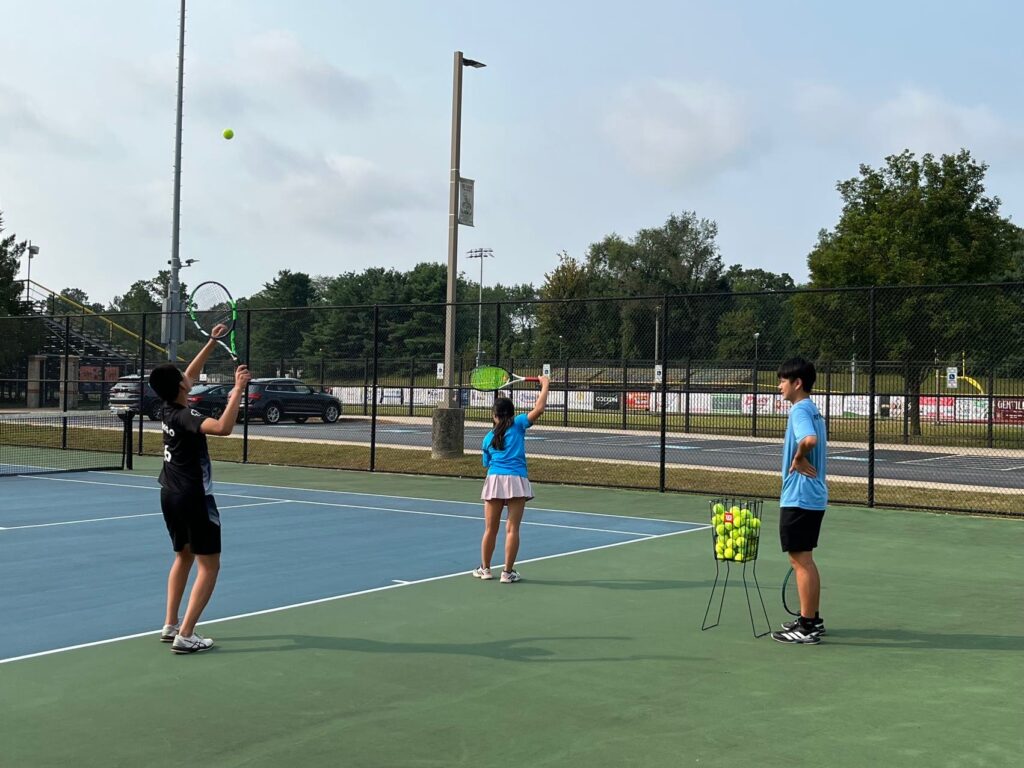
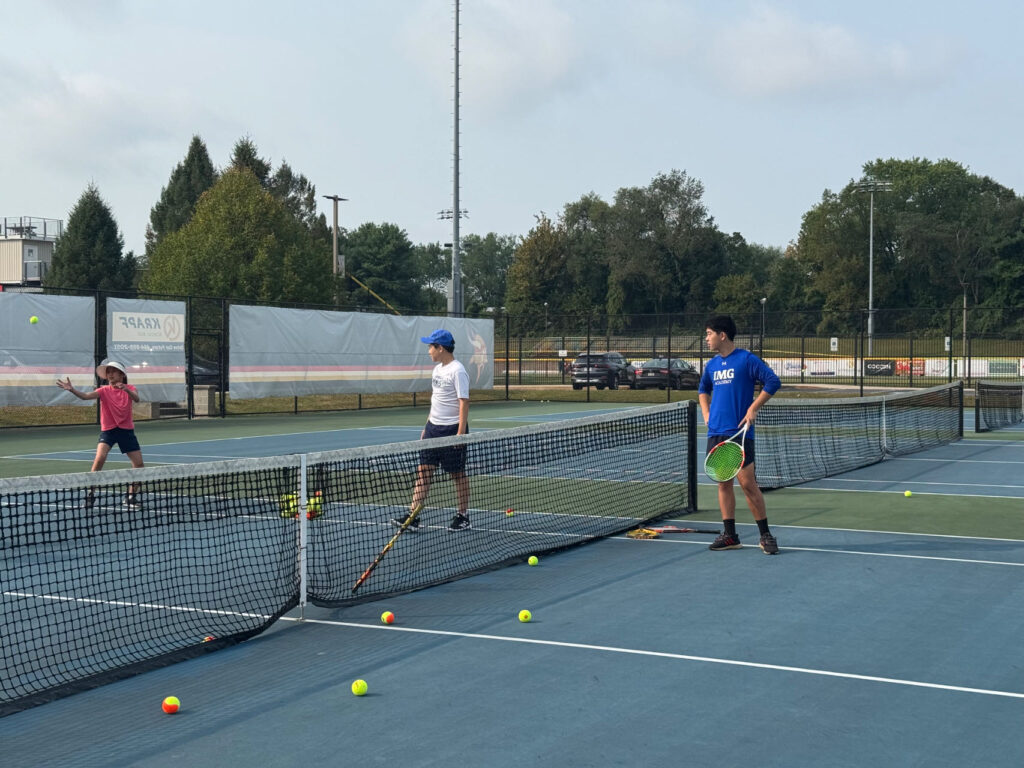
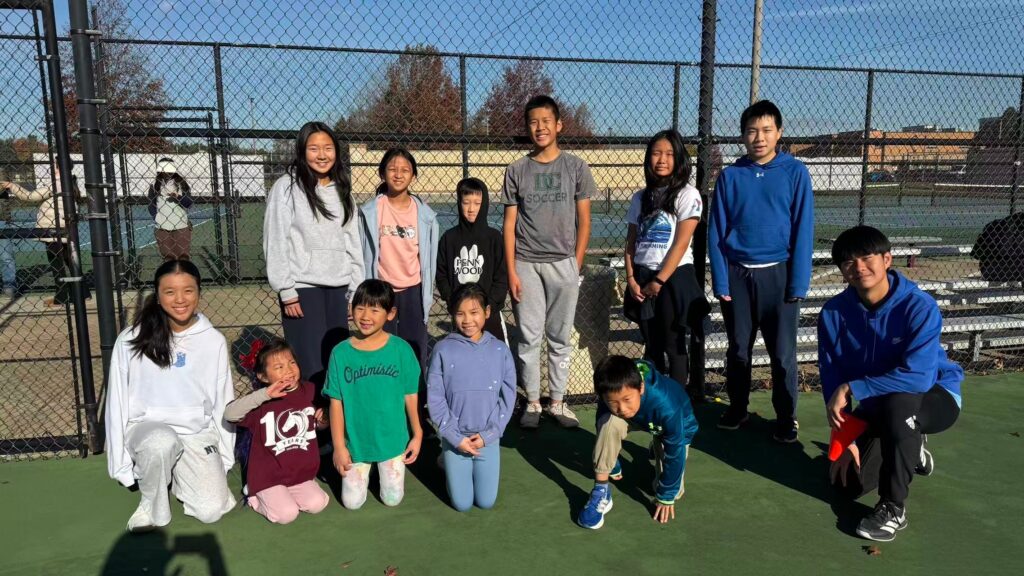
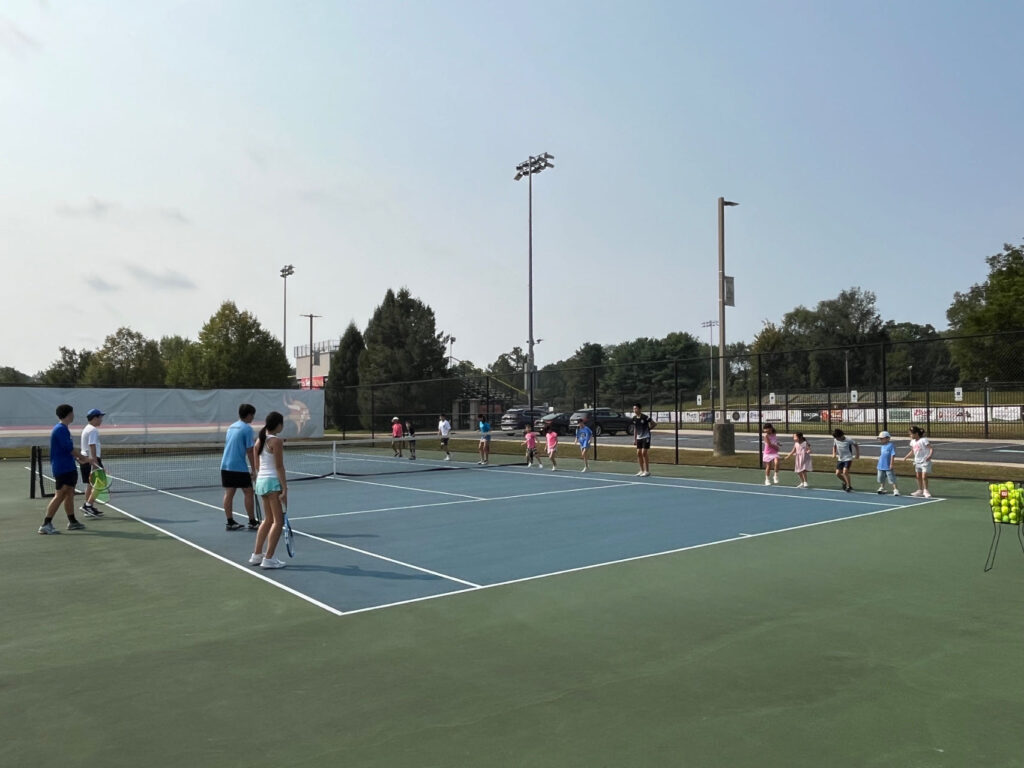
Last summer, I led efforts to support the Setting Scoliosis Straight Foundation by creating a local tennis program, Rally Up, and donating proceeds to the foundation. After running two trial lessons in June, our team officially began Rally Up’s fall session when this year’s school year began. We successfully held eight affordable tennis classes for kids aged 6 through 13, and I’m so happy to have ended up donating $600 of our proceeds to Setting Scoliosis Straight to support kids who, like me, have scoliosis. Rally Up is beginning its spring session soon in April, and we hope to continue to be able to support SSS with our proceeds.
Rally Up Fundraiser
Through her own scoliosis journey, Natalie was inspired to give back by supporting Setting Scoliosis Straight and our mission to advance treatment for children worldwide through research and education. She organized a tennis‑lesson fundraiser called Rally Up to raise money for scoliosis research. Thanks to her hard work—and with the help of her friend Ethan—they raised $600 through this charitable event.
Thank you so much, Natalie and Ethan, for organizing this fundraiser. We look forward to next year’s event.