My scars tell a journey I can be proud of- brace, wardrobe struggles, surgery, and all. They remind me I am strong, that I can endure anything. But I wasn’t always proud of my scoliosis.
Hi, I’m Kate, a 15-year-old girl from Central California invested in helping others. I’m a sister, a daughter, an artist, a mathlete, and a passionate musician. I also have scoliosis. Diagnosed at the early age of eight years old, my pediatrician informed me that I had a 30.3 degree curve and urged me to visit a specialist. My parents scoured the internet for the best pediatric spine doctor nearby, and I wound up at a spine center in LA a few weeks later, where the doctor told me I needed to be braced to prevent my curve from progressing. Having no clue how significantly this would impact my life, I went to the orthotist to get fitted for a brace. I got to choose what, at the time, I truly believed was the prettiest ladybug print. Little did I know, I would soon grow to loathe it.
Minimum 22 hours a day, 7 days a week, 52 weeks a year. I hated it. I could no longer bend over and touch my toes. I couldn’t twist my torso. I couldn’t wear my favorite dress. I had to sit down a certain way so my tank top wouldn’t bunch up in my brace. Living in a desert valley, temperatures reached up to 118 degrees in the summer. My brace was insulation, trapping in the heat, soaking up the sweat. Every field trip form from that point on, my mom wrote, “Overheats easily due to brace for scoliosis. Can’t be outside in heat too long.” All my teachers knew. My friends knew something was wrong with my blocky torso, but I refused to tell them.
After a while, I got used to it, looking forward to the twenty minutes of relief at the end of the day, when I got to take off my brace to shower. After trying on a multitude of clothing items that either accentuated the blockiness or drowned me, I had a closet full of brand new clothes. When my close friends began to pry, I confessed (greatly to my relief, they didn’t think I was weird or start hanging out with other people on the playground); in fact, they supported me. I even got used to playing my violin with it, always sitting with the best posture. I realized the brace is part of my story, but it doesn’t have to be my identity.
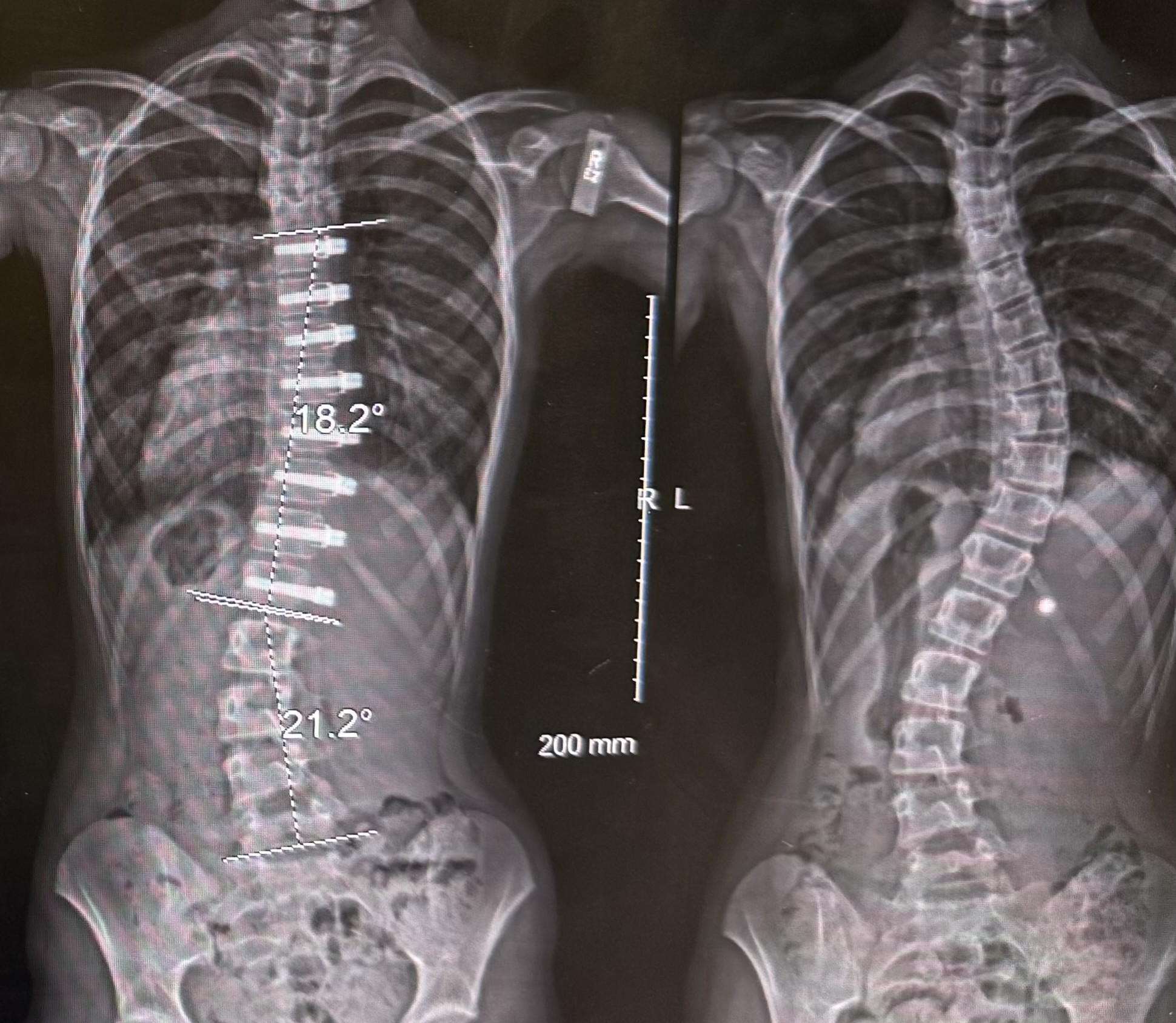
Although I wore my brace diligently, my curve proceeded to get worse. In sixth grade, my upper curve reached 45 degrees. My parents and I were researching our options, when we came across a relatively new surgery procedure for scoliosis: Vertebral Body Tethering (VBT). However, when we questioned my neurosurgeon about it, he seemed unsure and admitted the number of times he performed that surgery was in the single digits. Knowing this decision would impact the rest of my life, my mom searched for a doctor who could inform us of all our options.
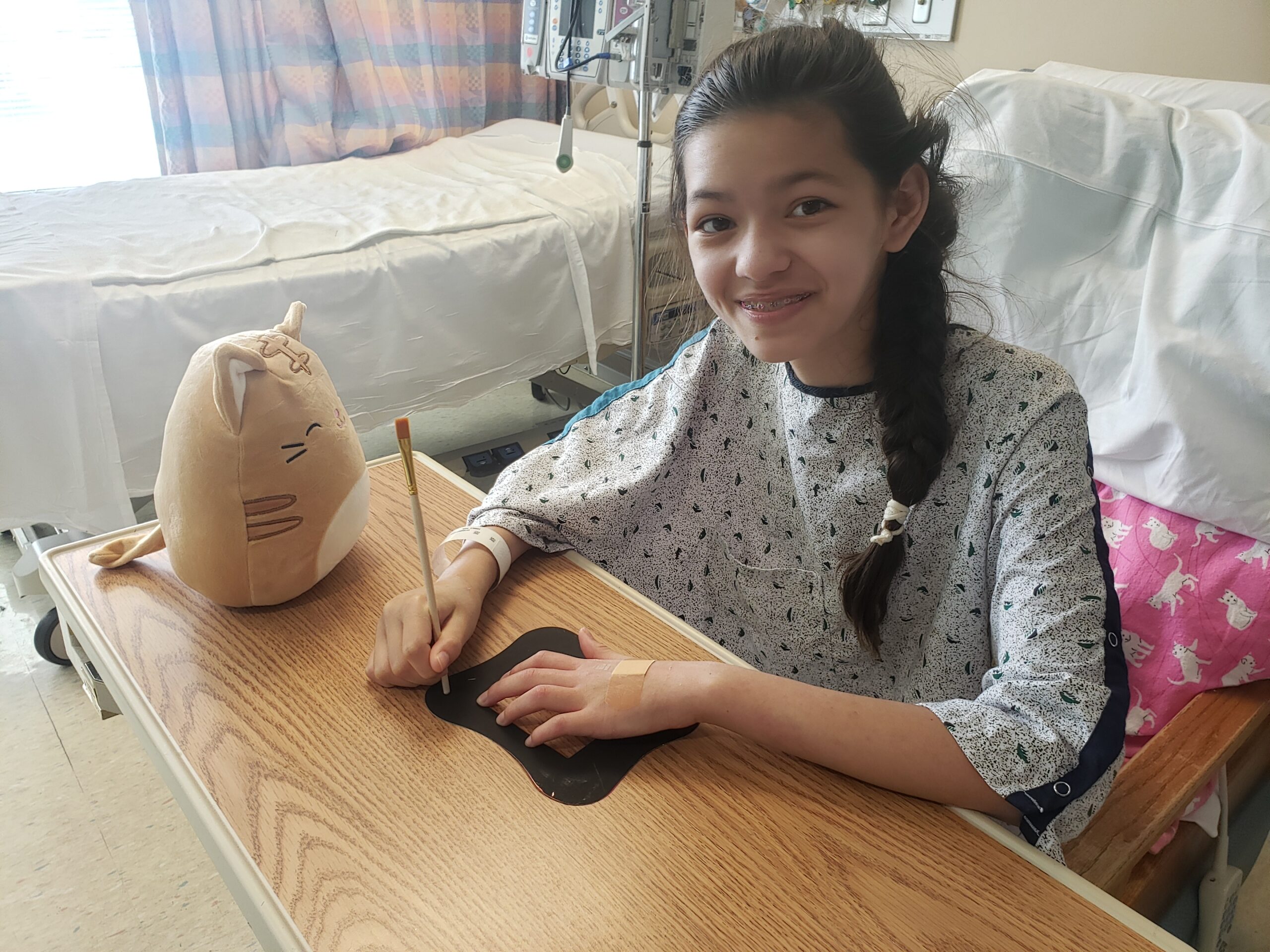
Weeks later, I flew to Philadelphia and met Dr. Samdani, both an incredible surgeon and a pioneer of VBT, having performed it thousands of times already. Since the tethering straightens out your spine as you grow, and I had a few years of growth remaining, we ultimately decided on VBT. The day of the surgery, as I counted to ten, I drifted off into uncertainty. Thankfully, the procedure ran smoothly- and I grew an inch taller in a few hours! I spent six days in the hospital, including Easter day, before flying back to California. Excused from six weeks of school, I participated in a Zoom curriculum while recuperating at home.
At first, I could only take shallow breaths without having chest pains, so I was assigned breathing exercises. Every time I moved, if it wasn’t the most ginger action, there was a sharp pain in my right shoulder. Since I longed to practice my violin, I worked on building back my range of motion gradually, knowing it would be restricted for some time. This forced me to explore other endeavors. I picked up a paintbrush and discovered an escape from my presently restricted reality. I took out my laptop and discovered an entire world of information to get lost in, delving into studies and research on any topic that came to mind. I set a mathbook in front of me and discovered I could blaze through nearly four chapters in my time stuck at home.
By the seventh week, I was back in school. The doctor still instructed me not to bend more than 45 degrees, but I had regained most of my strength to engage in daily activity without much pain- with the exception of picking up my pencil. Still unable to play my violin, I took on the role of emcee for my school’s spring orchestra concert‒ watching from the wings, I ached for that familiar moment when I draw a breath and cue my section to play together, as one.
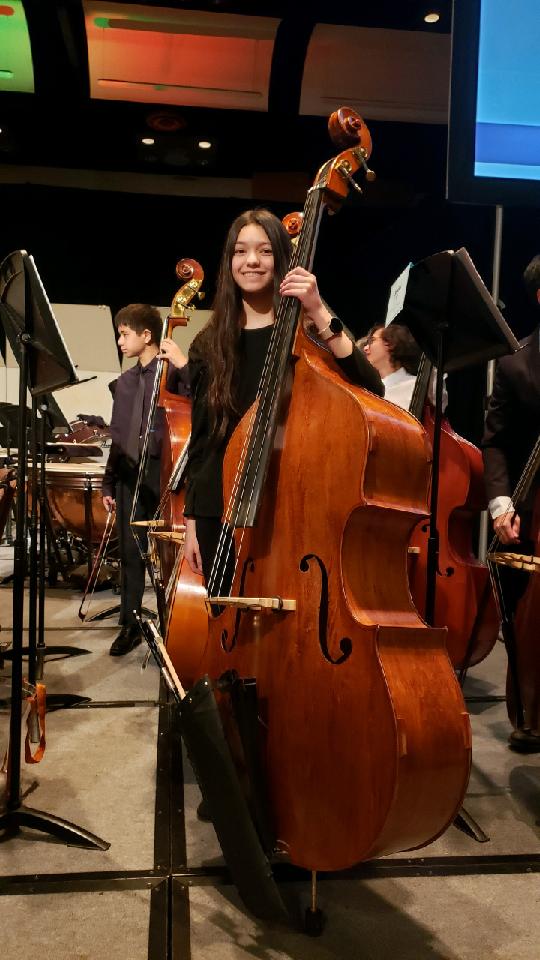
By the end of the eighth week though, I had restored virtually my full range of motion and was thrilled to be pain-free and more confident in my back. At last, I could pick up my violin again. But, when I did, I realized I wasn’t done discovering. So, of course, I decided to explore playing double bass, the most back-intensive string instrument; I immediately fell in love with it. Within five months, I found myself living that familiar moment again‒ but this time, leading the bass section of the California All-State Orchestra.
Now, my back is never a limitation (with the exception of bungee-jumping and skydiving, of course). Since the surgery primarily corrected my thoracic curve, I do still wear a Providence brace at night; but during the day, I can pursue my passions and enjoy my hobbies, no matter how extensively my back is involved, from painting, to bass, to archery. After wearing a brace for half of my existence on this planet, I am thrilled to announce I am growing out of bracing in just a few months, though I appreciate what my brace has done to correct my spine.
Looking back, it is clear that my scoliosis journey took part in shaping me to be who I am today. Embarking on that journey, I questioned why I had to wear a brace and not my mom, or my brother, or my friends. Since then, I have learned to embrace my back, yet not let it define me. My struggles, both internal and external, that arose with scoliosis did not strangle me; they strengthened me. Although I initially hid signs of my scoliosis during my journey, I can now talk candidly about it to people who care or people who I care about, like all the girls out there who are beginning their journey. I found it easier when I accepted my back as a part of me, who I am, but not my entire identity. I’m proud of my struggles. Proud of my scars. Proud of who I am.
I am perpetually grateful to Dr. Samdani and Shriner’s Children Hospital Philadelphia for enabling a smooth surgery procedure and recovery. They have truly made a lasting impact on my life, as I know they have for countless other girls and boys. I am also thankful for Curvy Girls and this foundation, the Setting Scoliosis Straight Foundation. Although I didn’t discover them until the end of my personal scoliosis journey, they were beneficial to my sense of belonging and resilience. In reality, I’m not ready to end my scoliosis journey yet; inspired by all the people who have made an impact on my journey, I am determined to make an impact on yours. You are not alone. If you are beginning your scoliosis journey, don’t be afraid. Yes, there may be changes in your life. But it’s how you deal with them that speaks to your identity. Remember, recovery leads to discovery, but only if you let it. Embrace your back, but define your own identity.
Read more patient stories like this from around the world.